The unofficial Microduck community
Made to move.
Trained by you.
Microduck Club is where owners of the tiny open-source biped robot share ideas, trained policies, and training files — so every duck learns something new.
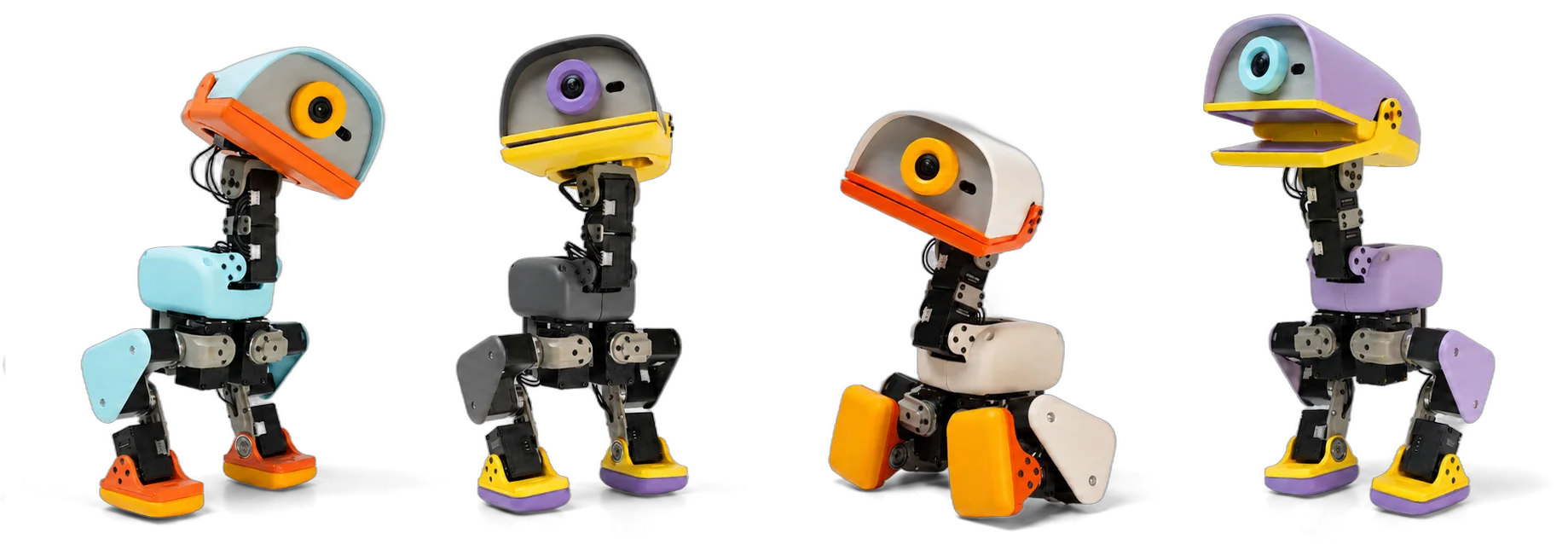
What is Microduck?
Microduck is Pollen Robotics' tiny open-source biped robot — a 25 cm duck that learns by doing. You train behaviors in simulation with reinforcement learning, deploy them to the real robot, then refine and retrain. Walking, sitting, kicking, roller skating, getting back up after a fall: if you can train it, your duck can learn it.
- Walking & balance gaits
- Kicks, tricks & recoveries
- Ready-to-run policy files
- Tips from fellow owners
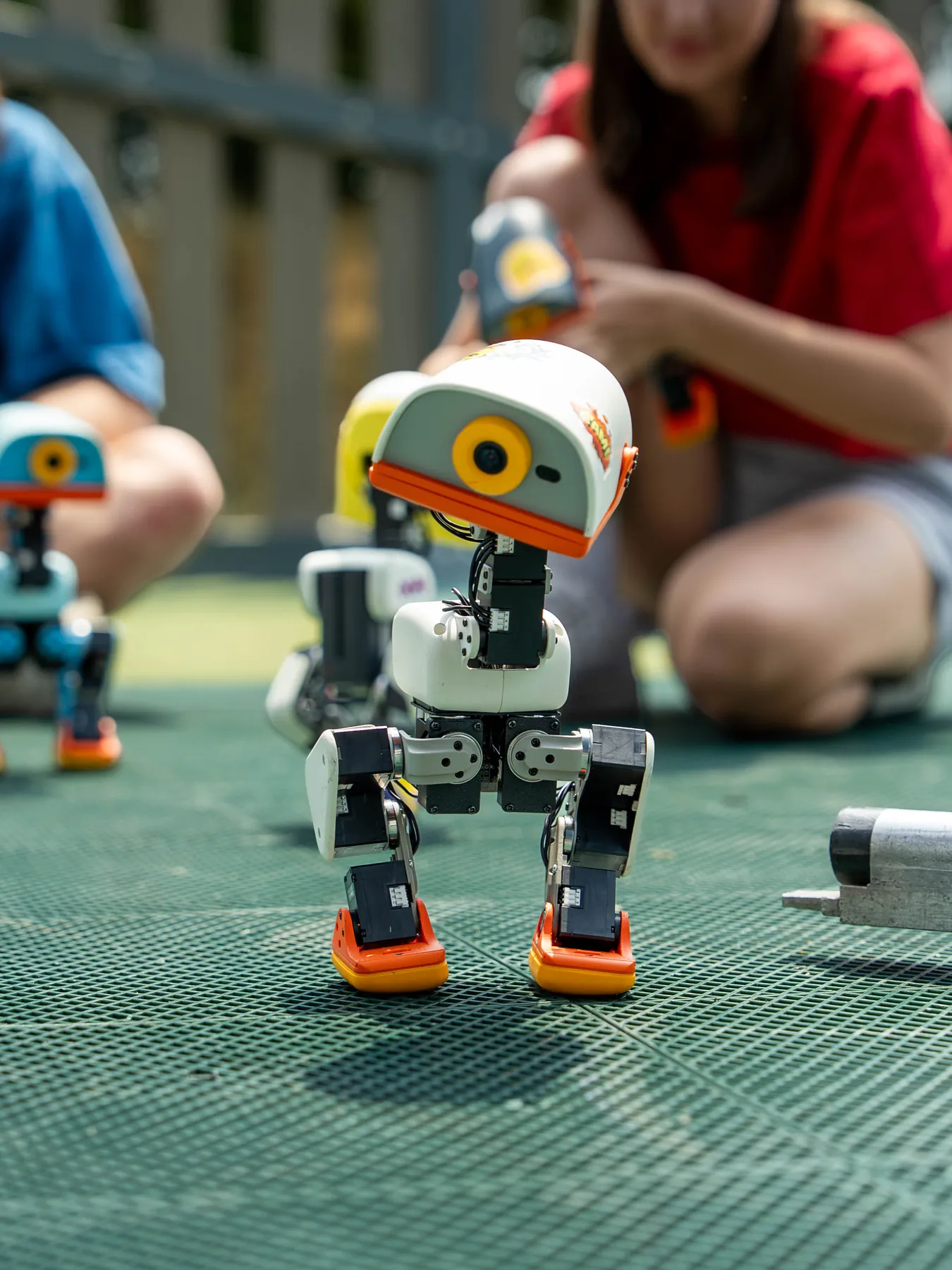
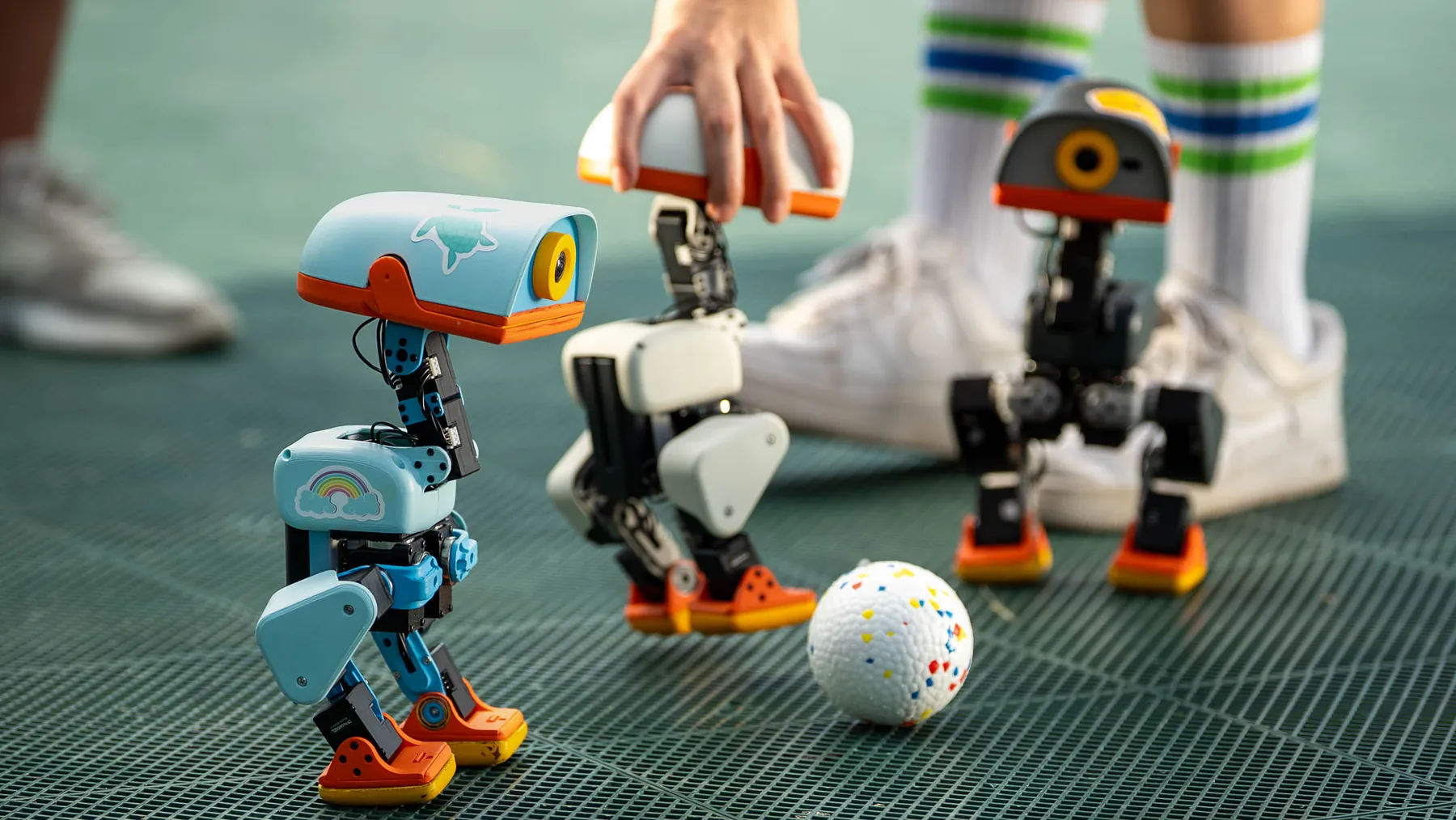
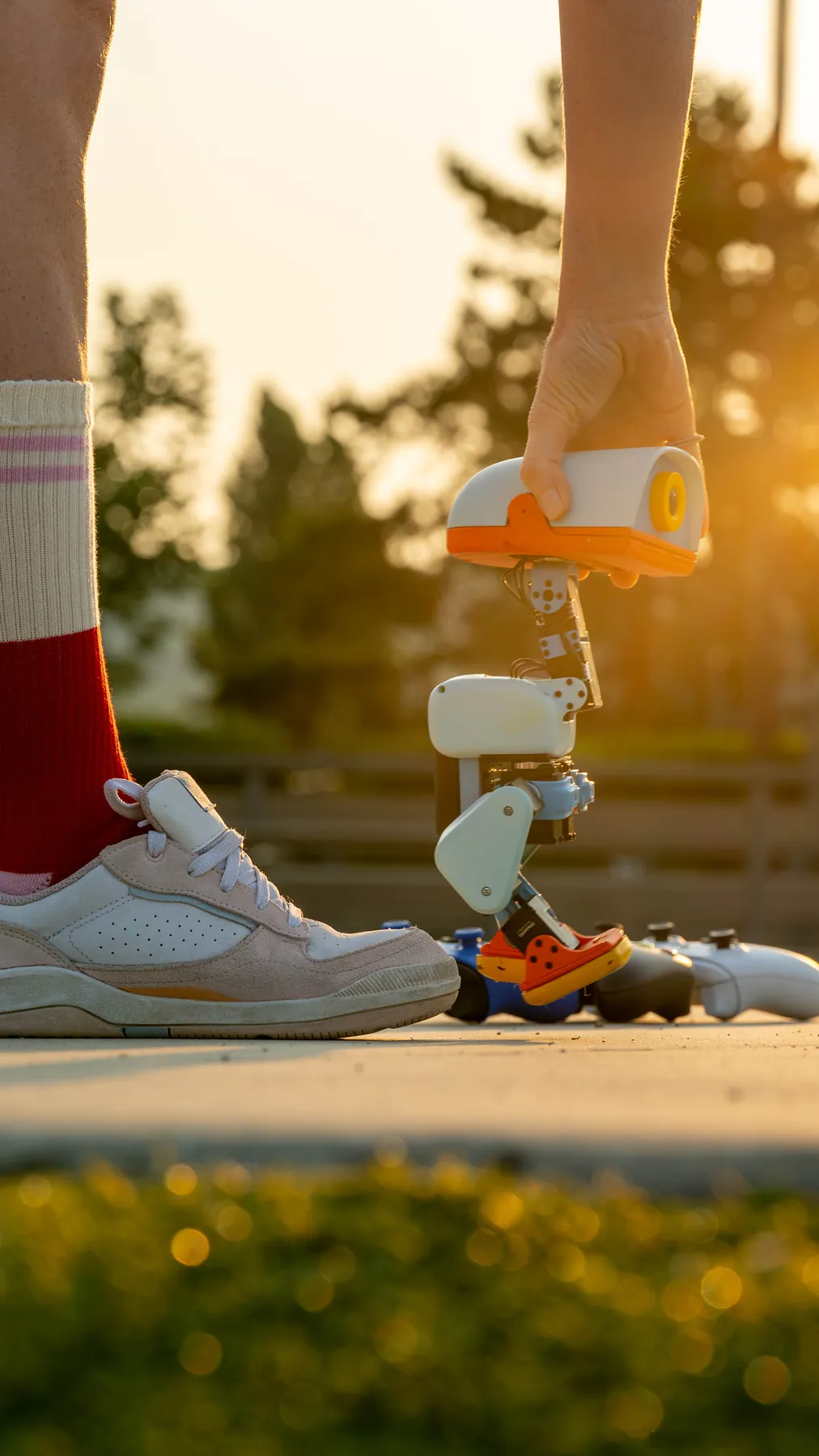
Ducks in action
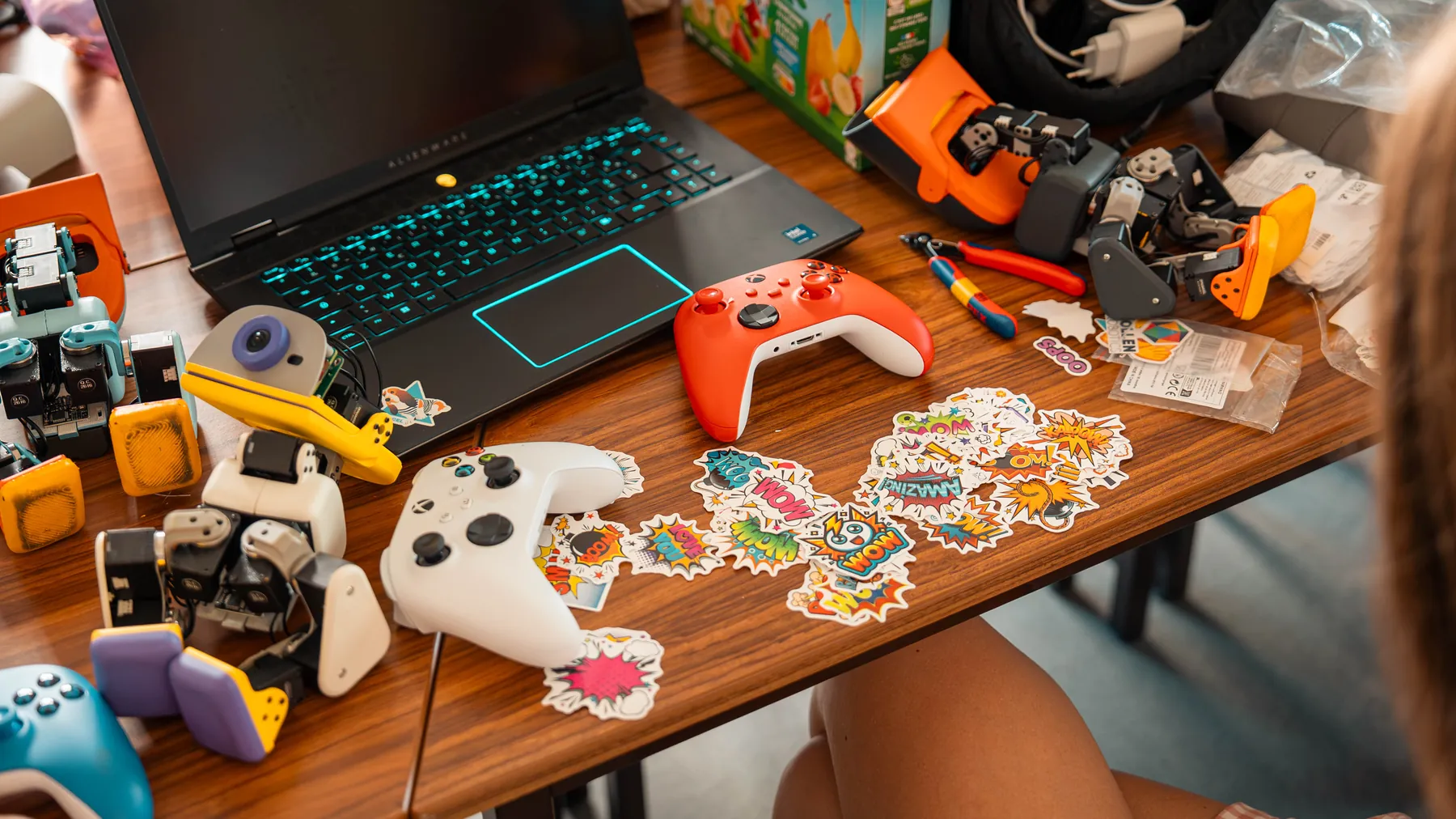
Real footage and photos of Microduck, courtesy of Pollen Robotics.


How the club works
From simulation to a waddling, kicking robot — and back into the community.
Teach your duck to walk, kick, skate or recover from falls with reinforcement learning — no risk to real hardware.
Push your trained policy to the real robot and watch 25 cm of pure determination waddle to life.
Publish your policy, training files, and results so other owners can run, remix, and improve them.
Latest from the flock
Club posts from members — plus Microduck posts spotted out on X.
Spotted a great Microduck post on X? Sign in to add it to the flock feed.
Sign inOrder in. Now the waiting begins. While I wait I am reading through the open-source repo and trying to understand the actuator limits before I start pushing torque in sim. The thing I keep coming back to is durability: a 25 cm biped that falls a lot is going to wear something out eventually, and I would rather have the replacement on the shelf than wait for shipping mid-experiment. Questions for existing owners: - Which joint fails first in practice — hip, knee or ankle? - Is it worth padding the feet, or does that mess up the friction assumptions in the stock policy? - Anyone printed a simple stand for tethered training so it does not faceplant every reset? Thanks in advance. Glad this place exists.
Joined after seeing the launch film and immediately wanted a way to compare gaits between owners in a way that is actually fair. Proposal: a simple standard test track anyone can reproduce at home. - 2 m straight on hardwood, timed. - 2 m straight on low-pile carpet, timed. - A 15 cm step-over obstacle, pass/fail. - A push-recovery nudge from the side, pass/fail. If a handful of us run the same four tests and post the numbers plus a video, we get a rough leaderboard and, more usefully, a sense of which policy tweaks actually help outside one person's living room. Anyone up for it?
Happy to be here. Short intro: I work on RL for legged robots and the Microduck is the first small biped I have owned personally rather than borrowed from a lab. First-week takeaways: - The sim policy transferred much better than expected, but only after I widened the domain randomisation on ground friction and motor latency. - Adding a small action-rate penalty removed most of the jitter I saw on the real hardware. - Battery voltage sag matters. My gait degraded noticeably in the last few minutes of a run until I started logging voltage alongside the episode data. I will upload my randomisation config once I have cleaned it up. Curious what ranges everyone else is using.
Pulled the trigger this morning and preordered a Microduck. I have been following the launch videos on repeat, especially the roller-skating clip. Plan for week one: 1. Get the stock walking policy running and just let it waddle around the flat. 2. Log IMU + joint data while it walks on carpet vs. hardwood, since I expect the friction gap to show up fast. 3. Try the sit/stand and recovery behaviours before touching anything custom. For those who already have theirs: what is the first thing you wish you had done differently on day one? Any spare parts worth ordering up front (feet, cables, a second battery)?
Every duck deserves new tricks
Join Microduck Club to share your policies, download training files from other owners, and help the whole flock learn faster.